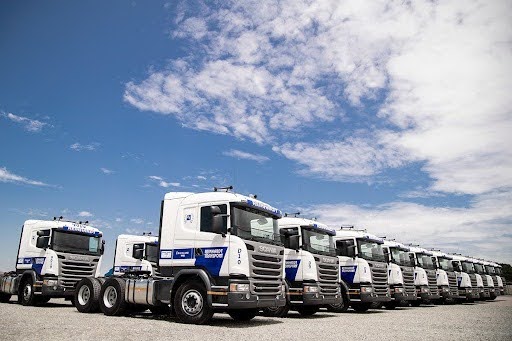
Free on transport, often written as FOT and also known as free on truck, is a delivery term that sets a clear handover point in a freight transaction. Under a free on transport arrangement, the seller is responsible for the goods, and carries the cost, up to the moment the cargo is loaded onto the transport vehicle at the agreed origin point. Once loading is complete, responsibility, cost, and transit risk pass to the buyer.
The value of the term is that it removes ambiguity. Both parties know exactly where one party’s obligation ends and the other’s begins. In bulk and industrial supply chains, that clarity is not a technicality. It determines who arranges and pays for line-haul transport, who carries the risk if cargo is delayed or damaged in transit, and how delivery is scheduled between supplier, transport operator, and receiving operation.
Table of Contents
How Free on Transport Works in Practice
A free on transport agreement divides a freight movement into two clear phases, separated by the point of loading.
Before loading, the seller carries the obligation. The seller arranges for the goods to be ready, available, and loaded onto the transport vehicle at the agreed location, which is typically a mine, plant, warehouse, or depot. Handling, staging, and loading costs up to that point sit with the seller.
From the moment of loading, the buyer takes over. The buyer is responsible for the line-haul transport, the cost of moving the cargo to its destination, and the risk attached to the goods while they are in transit.
Because the handover is tied to a physical, observable event, the loading of the vehicle, free on transport leaves little room for dispute. This makes it a practical structure for commodity movements where cargo changes hands at the point of dispatch rather than at the destination.
Free on Transport and Related Delivery Terms
Free on transport is one of several delivery terms used to define transport responsibility. It is most often compared with free on board (FOB).
The difference is the handover point. Free on transport places the handover at the loading of the road or rail vehicle, usually inland at the point of origin. Free on board places the handover later, when goods are loaded onto a vessel at the port. An exporter selling on free on transport terms hands responsibility to the buyer at the mine or plant; an exporter selling on free on board terms retains responsibility all the way to the port.
Selecting the right term depends on the commodity, the route, and how each party prefers to carry cost and risk. For inland and cross-border road movements, free on transport is a common and practical choice.
Bulk Transport and Bulk Logistics: Where Free on Transport Fits
Free on transport is a transport term, and understanding it helps clarify a wider distinction: the difference between bulk transport and bulk logistics.
Bulk transport is the physical movement of bulk cargo from one point to another. It is the haulage itself: vehicles, drivers, routes, and loads.
Bulk logistics is broader. It is the end-to-end coordination of that cargo across the supply chain, including planning, scheduling, staging, documentation, visibility, and the integration of transport with loading and receiving operations. Transport is one component of logistics, not the whole of it.
Free on transport defines the boundary of the transport leg, the point at which physical movement begins and one party’s responsibility for it ends. Bulk logistics is what coordinates that leg with everything around it. Recognising the difference helps organisations decide whether they are buying transport alone or a coordinated logistics service.

Free on Transport in Integrated Supply Chains
In an integrated supply chain, freight movement rarely happens in isolation. A single load may pass through a production site, a staging area, a weighbridge, and a receiving terminal, with several parties involved along the way.
Free on transport shapes how that movement is coordinated. Because the term fixes the point at which responsibility transfers, it determines who plans the onward journey, who books and schedules the transport operator, and who monitors the cargo in transit. When the handover point is clear, scheduling and communication across the chain become more predictable.
Where the term is poorly defined, the opposite happens. Uncertainty over who carries responsibility for a given leg creates scheduling gaps, administrative delays, and disputes when cargo is delayed. In integrated freight environments, a clearly stated delivery term is part of keeping the wider movement coordinated.
Practical Considerations When Applying Free on Transport Terms
Organisations setting up freight arrangements on free on transport terms generally confirm a few points before finalising an agreement:
- The exact loading location, and the precise point at which responsibility transfers.
- Which party arranges and pays for line-haul transport once the vehicle is loaded.
- How loading, staging, and depot handling are scheduled between the parties.
- What documentation is required, including cross-border paperwork where the route crosses a border.
- How cargo will be tracked, and how delivery status will be reported during transit.
Confirming these points in the contract reduces the risk of disputes and supports smoother freight execution.
An Illustrative Example
Consider a bulk commodity producer that sells its output on free on transport terms. Under this arrangement, the producer is responsible for having material extracted, staged, and loaded onto vehicles at its site. Once each vehicle is loaded, responsibility for the onward movement transfers to the buyer.
The buyer, in turn, appoints a transport operator to move the cargo from the production site to a receiving terminal. Because the handover point is clearly defined, the producer can plan loading around its production cycle, the buyer can schedule transport against terminal receiving windows, and the transport operator works to a clear, agreed scope.
The arrangement works because every party knows where its responsibility starts and stops. The same movement, run without a clearly defined delivery term, would be far more exposed to scheduling gaps and administrative uncertainty.
How Reinhardt Transport Group Supports Structured Freight Coordination
Reinhardt Transport Group operates as a transport partner across bulk and industrial supply chains, moving commodities for mining, agricultural, and industrial operations across Southern Africa. Delivery terms such as free on transport sit at the centre of that role, because they define the scope of each transport movement the Group is appointed to carry out.
A clearly defined transport term allows transport to be planned, executed, and delivered against a precise scope of responsibility. Across its multi-divisional network, RTG coordinates transport with loading and receiving operations so that freight moves predictably from origin to destination. For operations that want transport handled as a coordinated service rather than a series of separate movements, that structured coordination is the practical difference between bulk transport and bulk logistics.
A Practical Perspective on Free on Transport
A clearly structured delivery term is a small piece of documentation with a large operational effect. Free on transport, applied correctly, gives every party in a freight movement a shared understanding of responsibility, cost, and risk.
To discuss how Reinhardt Transport Group can support your freight coordination requirements, contact our team at Click to show email or call +27 (0)11 363 9300.
Frequently Asked Questions
What does free on transport mean?
Free on transport, or FOT, is a delivery term under which the seller is responsible for the goods, and their cost, until they are loaded onto the transport vehicle at the agreed origin point. Once loading is complete, responsibility, cost, and transit risk transfer to the buyer.
Is free on transport the same as free on truck?
The terms are used interchangeably. Both describe an arrangement where responsibility transfers when the goods are loaded onto the road or rail vehicle. Free on truck (FOT) is the more traditional wording.
What is the difference between free on transport and free on board?
The handover point differs. Free on transport transfers responsibility when goods are loaded onto the road or rail vehicle, usually inland at the point of origin. Free on board transfers responsibility later, when goods are loaded onto a vessel at the port.
Why does the delivery term matter in bulk logistics?
The delivery term defines who arranges and pays for transport, who carries the risk during transit, and how delivery is scheduled between the parties. In bulk supply chains, where a single movement involves loading, line-haul, and receiving stages, a clearly defined term keeps the whole movement coordinated.