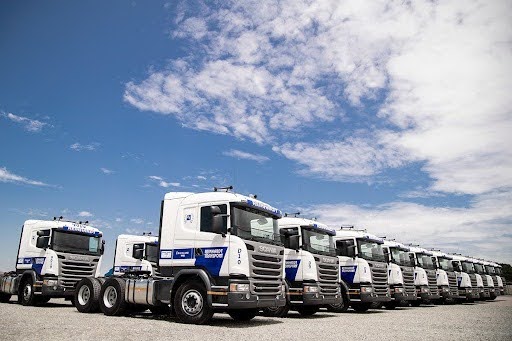
Across Southern Africa, key minerals such as chrome, manganese and coal, which are produced inland, must travel hundreds of kilometres along complex mine-to-port logistics networks before reaching international markets.
This journey follows export corridors – integrated routes that connect mining regions across the region with ports through road, rail and border infrastructure. These are the operational backbone of bulk commodity trade, and understanding how they work on a practical level is vital for mining houses, commodity traders and industrial producers who need reliable export logistics.
Rather than viewing transport as a series of isolated movements, experienced bulk logistics operators – such as Reinhardt Transport Group – approach mine-to-port logistics as a coordinated corridor system. This ensures that production planning, transport capacity and port scheduling are all aligned.
Table of Contents
What is a Mine-to-Port Export Corridor?
An export corridor is basically an integrated logistics system that links mines with transport networks and, eventually, port terminals, creating a single and seamless supply chain.
According to the Organisation for Economic Co-operation and Development (OECD), export corridors are vital for African countries in particular. They support industrial activity and enable trade by connecting production regions with global markets.
A typical bulk export corridor could include:
- Inland mining operations and load-out facilities
- Road and rail transport routes
- Logistics depots and staging facilities
- Border posts and customs infrastructure where relevant
- Export ports and terminal handling facilities
When these components operate seamlessly, commodities are moved consistently from inland mines to ships. However, because every aspect within the corridor influences the others, all planning needs to consider the entire mine-to-port logistics chain rather than just the individual transport legs.

How Do Mine Production Schedules Influence Transport Capacity?
The first component of any export corridor is the mine itself, because corridor planning ultimately begins with production.
Mining operations need structured production schedules that determine when and where ore is extracted. These schedules influence transport demand as the volume of material produced has to match the existing haulage capacity.
Research into mining operations modelling shows that aligning production planning with transport capacity is key. This helps prevent bottlenecks and reduces haulage costs by improving routing efficiency and equipment utilisation. When production volumes exceed available transport capacity, several operational issues typically emerge. These include:
- Congestion on haulage roads
- Increased queue times for trucks
- Delays in moving ore to processing or export facilities
On the other hand, when transport planning integrates with production schedules, bulk logistics operators can optimise routes and maintain consistent cargo flow. This coordination is one of the key reasons corridor-based logistics planning is so important for bulk exports.
The Role of Road Transport in Southern Africa’s Freight System
Once the minerals have been collected from the mines, it’s on to the next phase of the transport corridor. In Southern Africa, this often involves a combination of road and rail infrastructure. Rail remains an important option for large-volume exports such as coal and iron ore. However, road transport continues to play a critical role across the broader freight system.
Studies of South Africa’s logistics sector show that road freight dominates domestic cargo movement, supporting the transport of industrial goods, fuel and mining commodities. National reforms are underway to strengthen rail capacity through infrastructure upgrades and private sector participation; however, these developments will take time to fully materialise.
In the meantime, for many bulk commodities, road transport is a stabilising element within export corridors, supporting continuity when rail availability fluctuates. Road transport offers:
- Flexibility in routing
- Faster response to production changes
- Access to mines not connected directly to rail infrastructure

How do Port Operations Influence Inland Logistics?
On the other end of the export corridor is the port, which is the final gateway between inland production and international shipping routes. However, port operations don’t always move at a uniform pace.
When vessels are delayed or terminals experience congestion, the effects can be felt across the entire mine-to-port logistics network. Delayed vessels can lead to cargo backlogs, increased storage pressure, and disruptions to transport scheduling inland.
Port congestion generally occurs when arriving ships are unable to berth immediately and must wait at anchorage for terminal capacity to become available. Several factors can contribute to congestion, including:
- Increased cargo volumes
- Limited port capacity
- Weather disruptions
- Labour shortages or operational delays
- Trade route disruptions
Because shipping vessels operate on fixed schedules and shipping costs accumulate when there are delays, even minor disruptions at the port can influence transport planning further inland. This is why experienced bulk logistics operators monitor port activity closely and align transport planning with vessel schedules wherever possible, making necessary adjustments.
Why Corridor-Based Planning Supports Export Continuity
Considering the interaction between production, transport capacity and port operations, corridor planning has become a central feature of modern bulk logistics. Mine-to-port logistics corridors rely on carefully coordinated planning and governance for operational flow as they connect various infrastructure systems and economic activities across Southern Africa.
In practice, successful export corridors have to rely on several forms of coordination, including:
- Alignment between mine production and transport capacity
- Coordination between transport operators and port terminals
- Infrastructure planning across road, rail and border systems
When corridor planning happens in isolation – such as focusing only on transport availability without considering port throughput – then the supply chain is likely to be disrupted. A corridor-based perspective allows bulk logistics operators to identify risks earlier and adapt routing or scheduling strategies accordingly.

How Important Is Supply Chain Visibility in Mine-to-Port Logistics?
Supply chain visibility – across the entire supply chain – is vital in modern logistics. And, as logistics networks grow more complex, this enhanced visibility is only going to become even more critical in maintaining operational stability.
Supply chain visibility allows oversight of the movement of products and information throughout the logistics chain in real time. With data analytics and operational communication systems, this improved visibility allows organisations to:
- Monitor fleet movements
- Track cargo progress
- Identify potential disruptions earlier
- Improve coordination between partners
- Make faster operational decisions and adjustments in real time
In bulk logistics corridors, this ensures everything from mine production to port scheduling is aligned. Without this level of coordination, disruptions at one point in the corridor can quickly affect the rest of the supply chain.
What’s the Future of Corridor-Based Export Logistics?
As global demand shifts and supply chains respond to an increasingly volatile market environment, the efficiency of mine-to-port logistics corridors will remain an invaluable factor in determining export reliability. Minerals such as chrome, manganese and coal continue to support industrial production and international supply chains, and export volumes across Southern Africa are likely to evolve as market conditions change.
Meeting these shifting demands requires more than simply expanding transport capacity. Mine-to-port logistics relies on coordinated planning across production schedules, transport networks and port infrastructure, supported by strong supply chain visibility. With this level of integration, operators can actually anticipate disruptions, adjust transport flows in real-time, and ensure there’s predictable cargo movement – even across complex mine-to-port logistics environments.
In complex Southern African corridors, maintaining export continuity requires more than capacity. It requires structured coordination across production, transport and port systems, supported by real-time visibility and operational control. This is where experienced logistics partners play a critical role in ensuring reliability across the full export chain.
Companies such as Reinhardt Transport Group, which operate across bulk commodity corridors linking inland mining regions with export ports, work within these operational realities daily. Balancing fleet capacity, corridor conditions, port scheduling, and regulatory requirements requires the coordinated mine-to-port logistics approach that they’ve mastered over decades.